A nurse who answers. Who already knows who you are.

A 24/7 nurse advice line for Indian Health Service, tribal, and urban Indian health programs.

Licensed RNs Answered live, never voicemail Native-owned

Contact us
Capability statement available now.
tultxʷ · where the waters meet
The premise

You shouldn't have to explain your whole history before someone knows how to help you.

TULQ is built for that call.
How the line works

It never even rings.

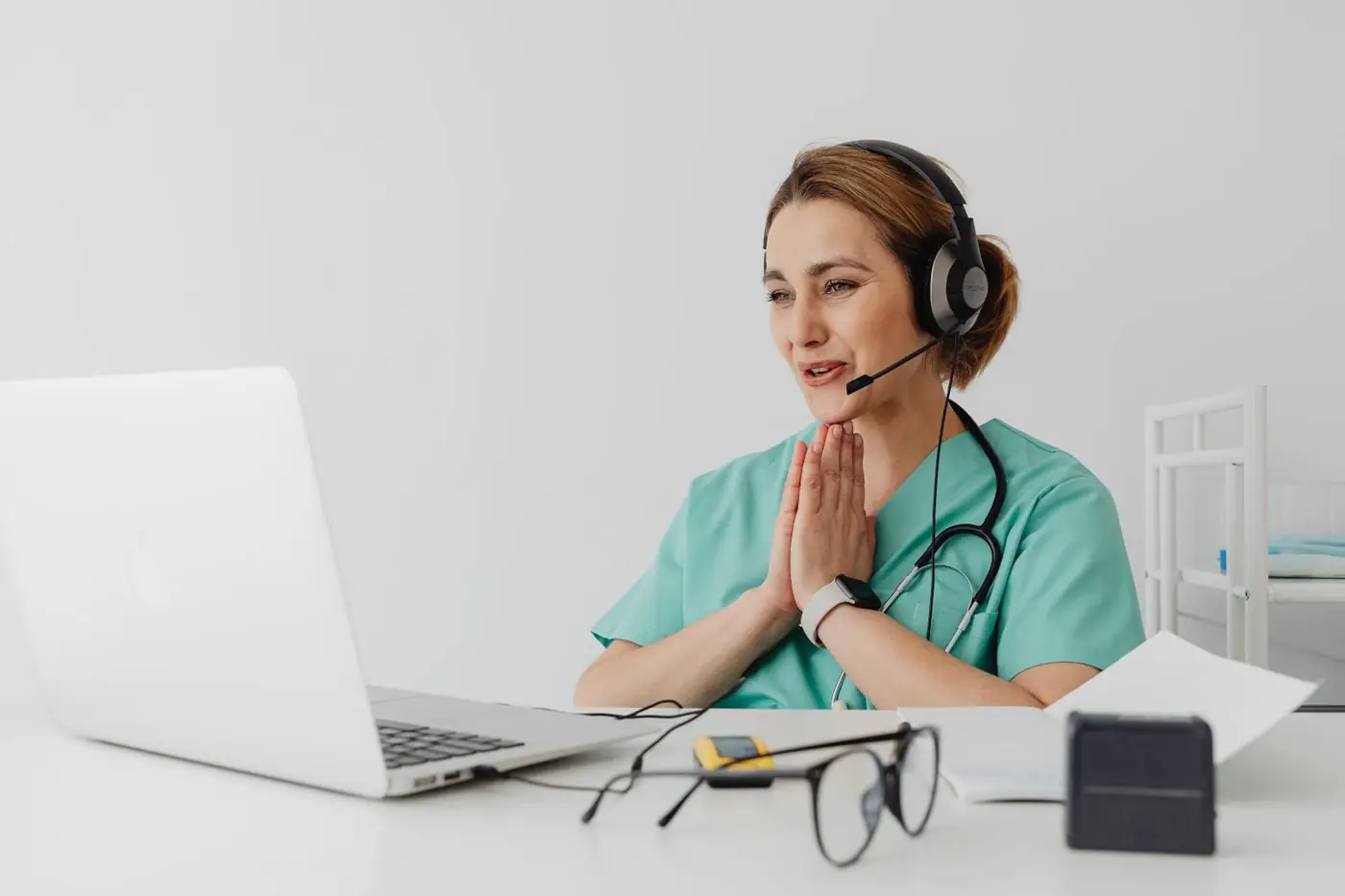
Whether you're calling from your ancestral lands, your cousin's house, the road, or the parking lot outside the clinic, your call is answered the moment it connects. AI assisted intake gathers the basics, then a licensed RN takes over. The nurse runs the same Schmitt-Thompson protocols that 95% of U.S. medical call centers use, with one difference: our nurses already understand the cultural context of the call. Every call ends with a plan: stay home and here's how, see the clinic tomorrow, or go now.

The line 24/7 Every hour. Every day. Every year.
Protocol coverage 95% U.S. medical call centers run on the same Schmitt‑Thompson framework.
Who triages RN Every clinical decision is made by a multi-state licensed registered nurse. AI handles intake, never judgment.
What you don't get 0 Voicemail. Hold music. 'Press 2 for...'

The call ends with a plan, not a transfer.

tultxʷ · the confluence of two rivers

Who picks up

A tribal operator and a nurse who's carried the pager.

Built to satisfy both the contracting officer at IHS and the patient on the other end of the call.

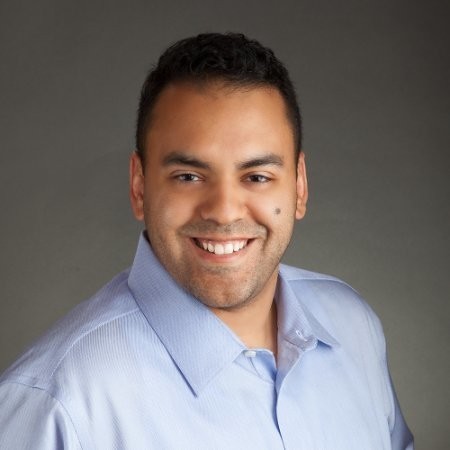
Michael Chavez Ross
Founder · CEO · President

Michael Chavez Ross

Snoqualmie tribal citizen · Government & tribal enterprise leader

Enrolled member of the Snoqualmie Tribe and former Vice Chairman of the Snoqualmie Tribal Council. Worked on Capitol Hill in Washington, D.C., advocating for all tribes on keystone legislation, including the reaffirmation of the Violence Against Women Act, Savannah's Act, and the tribal provisions of the CARES Act. Partnered with the Snoqualmie Tribe and local communities to protect and preserve elders' assistance programs. Spent three years helping manage the Tribe's Health and Wellness clinic.
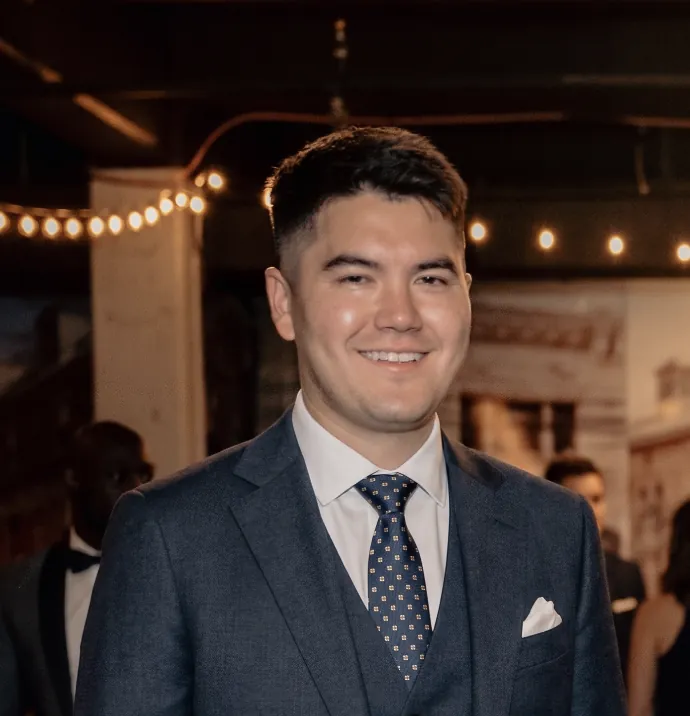

Jayson Forrest Minagawa, RN, BSN
Clinical director · RN, BSN

Jayson Forrest Minagawa

Multi-state ICU veteran · 11+ years acute & critical care

Eleven years and a dozen ICUs deep: Level 1 trauma, cardiovascular intensive care, travel assignments across the country. He has delivered hospital-level care into patients' homes as lead nurse for a telehealth company, answered every emergency alarm as the rover RN inside a supermax prison, and held the line through the COVID surge. Most recently he ran a 142-bed skilled nursing facility as its Unit Manager and MDS Coordinator.

Who we serve

The patients the system keeps losing track of.

TULQ is built for the populations that mainstream telehealth has consistently underserved, and the institutions trying to reach them.

01

IHS beneficiaries, nationwide.

Eligible AI/AN patients across the 12 IHS Areas, from urban centers to the most remote service units.

~2.8M people
02

Tribal nations & 638 facilities.

Tribal health programs operating under the Indian Self-Determination and Education Assistance Act, looking to extend after-hours and surge capacity.

Tribal sovereignty
03

Urban Native communities.

Urban Indian Organizations and the ~70% of AI/AN people who live in cities, where access falls through the cracks between federal and state systems.

~70% of AI/AN
04

Underserved & rural populations.

Communities where the nearest ED is a long, expensive drive, and a phone call to a competent nurse changes what happens next.

Rural access
Why TULQ

Native-owned. Clinically deep.

TULQ is structurally and culturally aligned with how Indian Country works, not retrofitted to look the part.

Pillar 01

Buy Indian Act qualified.

Wholly owned by Michael Chavez Ross, enrolled citizen of the Snoqualmie Indian Tribe. Eligible to compete as an Indian Economic Enterprise under 25 U.S.C. § 47.

25 U.S.C. § 47 · 2022 IHS final rule
Pillar 02

Cross-system clinical depth.

Eleven years across ICU, telehealth, corrections triage, and SNF leadership. A clinical director who has worked every setting the calls come from.

RN · WA · CA · OR · BLS · ACLS
Pillar 03

Culturally competent by design.

Cultural competency built in at the protocol level, not bolted on at training. Informed by tribal governance experience, lineage, and lived understanding.

Schmitt-Thompson protocols · Culturally adapted
The numbers worth knowing

The numbers, plainly.

The numbers below are why the line exists. They are not decoration.

Population
2.8M
AI/AN beneficiaries the Indian Health Service is responsible for.
Coverage
12
IHS Areas across the United States, plus ~170 service units.
Urban
~70%
Of AI/AN people who live in urban areas, often outside direct IHS coverage.
Diabetes
Type 2 diabetes prevalence in AI/AN adults vs. non-Hispanic White adults.
Suicide
91%
The suicide rate among AI/AN people is 91% higher than the general U.S. population.
The line
24/7
When TULQ picks up. Every hour. Every day. Every year.
Sources · IHS · KFF · OMH-HHS · 2022 to 2024 reporting
Our story · in brief

The name comes from the confluence.

TULQ takes its name from tultxʷ, which means the confluence of two rivers in Lushootseed, the native language of the Snoqualmie People. It is a word about meeting. A confluence of cultural care.

Michael's great-grandmother, Ollie Moses, was a direct descendant of signers of the 1855 Point Elliott Treaty. As a child she was taken to Chemawa Indian Boarding School.

TULQ exists, in part, because of what it took to survive that. The line we answer today is part of how that gets repaired.

Read the full story
Common questions

What people ask before they call.

Answers on nurse triage, Purchased/Referred Care, and how the Buy Indian Act applies to a nurse advice line contract.

What is a nurse advice line?

A nurse advice line is a telephone service staffed by licensed registered nurses who assess a caller's symptoms and direct them to the right level of care: self-care at home, a clinic appointment the next morning, urgent care, or the emergency department. It is not a diagnosis service and it is not an answering service. The nurse works from written, physician-reviewed protocols, documents the encounter, and hands off to the caller's own care team when the protocol calls for it.

For a tribal health program, the line is usually what covers the hours the clinic is closed: nights, weekends, and holidays.

Source: AAACN telehealth nursing standards
What is Purchased/Referred Care, and why does ER diversion matter to it?

Purchased/Referred Care (PRC, formerly Contract Health Services) is the Indian Health Service program that pays for care a patient receives from a non-IHS provider when that service isn't available at the local IHS or tribal facility. An emergency department visit at an outside hospital is typically a PRC expense.

PRC funds are appropriated annually and are finite. When a program's PRC funds are committed, later requests can be deferred or denied. That makes every avoidable ER visit a direct draw against a fixed budget, and it's why routing a 2 a.m. fever call to the right level of care is a financial question as much as a clinical one.

Source: IHS Purchased/Referred Care
How does the Buy Indian Act apply to a nurse advice line contract?

The Buy Indian Act, codified at 25 U.S.C. § 47, authorizes the Indian Health Service and the Bureau of Indian Affairs to set procurement aside for Indian-owned economic enterprises. IHS strengthened its implementation in a 2022 final rule, which directs contracting officers to give the Buy Indian Act preference first consideration before other set-aside authorities.

In practice, that means a nurse advice line requirement at an IHS or tribal facility can be set aside for Indian Economic Enterprises (IEE) or, where the requirement fits a small-business size standard, for Indian Small Business Economic Enterprises (ISBEE). Contracting officers establish whether capable Indian enterprises exist through market research, most visibly, the Sources Sought notices posted on SAM.gov.

Source: IHS Buy Indian Act final rule, 2022
What is an Indian Small Business Economic Enterprise (ISBEE)?

An Indian Economic Enterprise (IEE) is a business that is owned and controlled by one or more Indians or Indian Tribes, meeting the ownership, control, and management thresholds in the Buy Indian Act regulations. An ISBEE is an IEE that also qualifies as a small business under the SBA size standard for the NAICS code on the solicitation.

The status is self-certified, but it is not a one-time box to tick: an enterprise must meet the eligibility requirements at the time of offer, at the time of award, and throughout performance, and a contracting officer can challenge a representation.

Source: 48 CFR HHSAR Part 326
Can a 638 tribal health program contract for its own after-hours nurse line?

Yes. Under the Indian Self-Determination and Education Assistance Act of 1975 (P.L. 93-638), a tribe or tribal organization can contract or compact to operate health programs the Indian Health Service would otherwise run. A program operating under a 638 contract or a self-governance compact makes its own procurement decisions, including how it covers the hours its clinic is closed.

That means a tribal health program does not have to wait for an IHS Area solicitation to put a nurse advice line in place. It can procure one directly.

Source: ISDEAA, 25 U.S.C. § 5301
Do Urban Indian Organizations have the same coverage options?

Urban Indian Organizations (UIOs) are funded under Title V of the Indian Health Care Improvement Act and serve American Indian and Alaska Native people living in urban areas, roughly seven in ten AI/AN people nationally. There are about forty UIOs across the country.

UIOs sit in a different funding position than IHS-operated and tribally operated facilities: they are not part of the Purchased/Referred Care program, so there is no PRC budget behind an outside emergency room visit. For a UIO, the case for after-hours nurse triage is about access and continuity for its patients rather than protecting a PRC allocation.

Source: IHS Urban Indian Health Program
What triage protocols does TULQ use?

TULQ triages on Schmitt-Thompson telephone triage protocols, the physician-authored standard used across the telephone triage industry. Every major nurse triage provider uses a protocol set of this kind; it is the floor, not the differentiator.

What we build on top of it is cultural competency at the protocol level: a nurse who understands multigenerational caregiving, the distance a patient may be from the nearest emergency department, and the history that shapes how a caller talks about pain.

Source: Schmitt-Thompson Clinical Content
Is TULQ affiliated with the Snoqualmie Indian Tribe?

No. TULQ is not affiliated with, sponsored by, or endorsed by the Snoqualmie Indian Tribe. Our founder, Michael Chavez Ross, is an enrolled citizen of the Snoqualmie Indian Tribe in his personal capacity, and the TULQ name comes from tultxʷ, the Lushootseed word for the confluence of the Tolt and Snoqualmie rivers. The company is separately and wholly owned by him.

Read the full story behind the name.

Contact & capability

Reach the people who built the line.

For contracting officers, partnership inquiries, and clinical questions: reach out directly. We answer our own phones.

Founder · CEO · President
Michael Chavez Ross
michael@tulq.health
Clinical Director · RN, BSN
Jayson Forrest Minagawa
jayson@tulq.health
Capability statement

Available on request, for contracting officers.

NAICS and UEI registration, SAM.gov status, Buy Indian Act representation, and the clinical scope of the line, in one document. Ask and we will send it the same day.

Get in touch